CELPIP Reading Part 2: reading to apply a diagram
What Part 2 asks — matching information between a diagram and a short message — and the cross-referencing habit that keeps it fast.


⚡ The short version
- Part 2 pairs a diagram or form with a short message and asks you to connect them.
- It tests cross-referencing — matching details across two sources, not deep reading.
- Work from the question to the diagram to the text, not the other way around.
Part 2 is the one with a picture in it — a diagram, a form, a schedule — alongside a short message. The skill it tests isn't reading speed or vocabulary; it's whether you can connect two sources and pull the matching detail. Treat it like a lookup, not a passage, and it goes quickly.
What Part 2 looks like
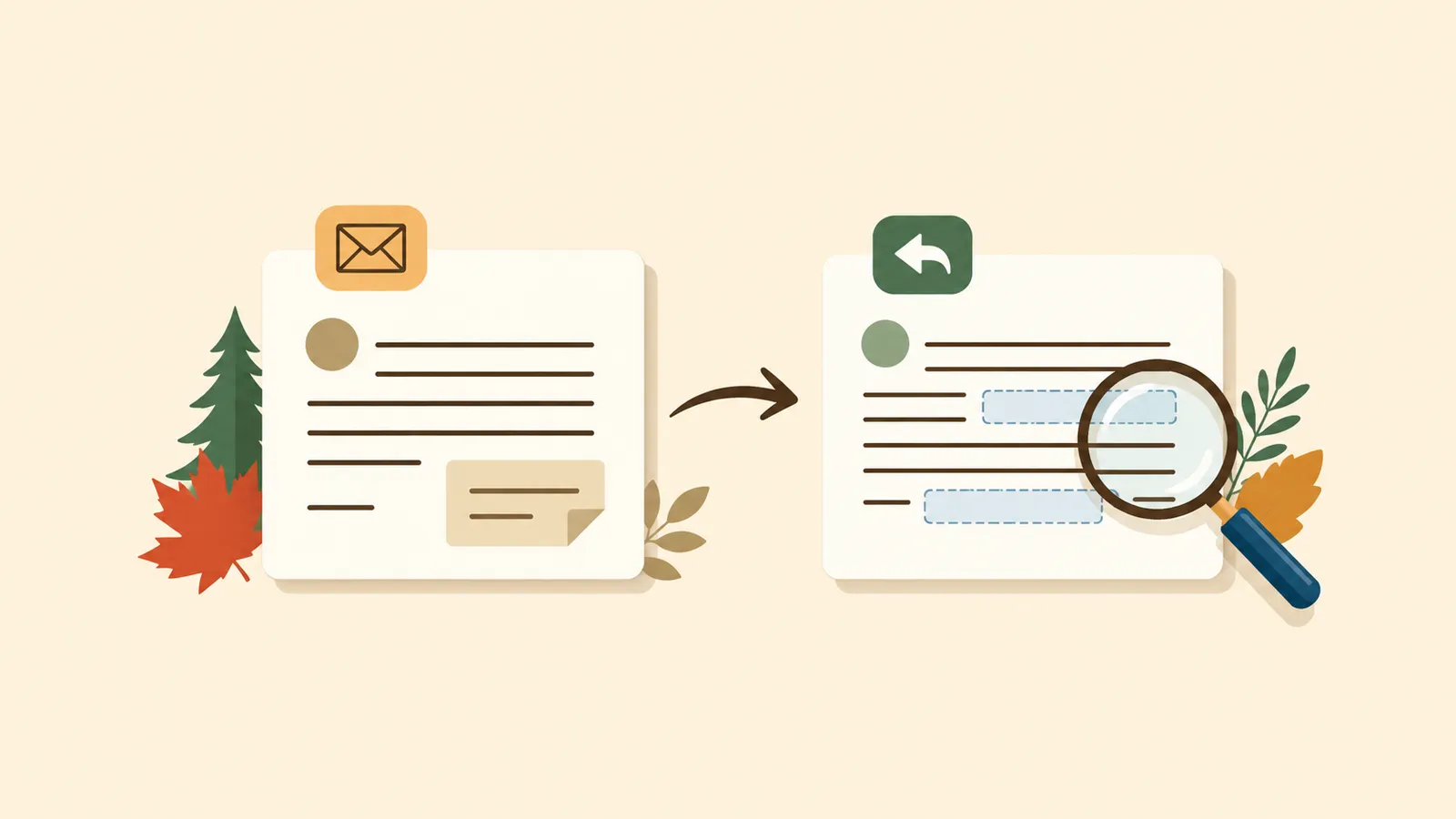
You're given a visual — a floor plan, an order form, an itinerary, a table — and a short related message (often an email referring to it). The questions ask you to find or confirm details by moving between the two: the message mentions something, and you check it against the diagram, or vice versa. For where this sits in the section, see the CELPIP Reading section, part by part.
What it's really testing
This is cross-referencing. The answer is rarely stated in one place — you confirm it by matching the message to the diagram. So the trap isn't a hard word; it's reading one source carefully and forgetting to check it against the other. Most wrong answers here are "true about the text but not the diagram," or the reverse.
A lookup method
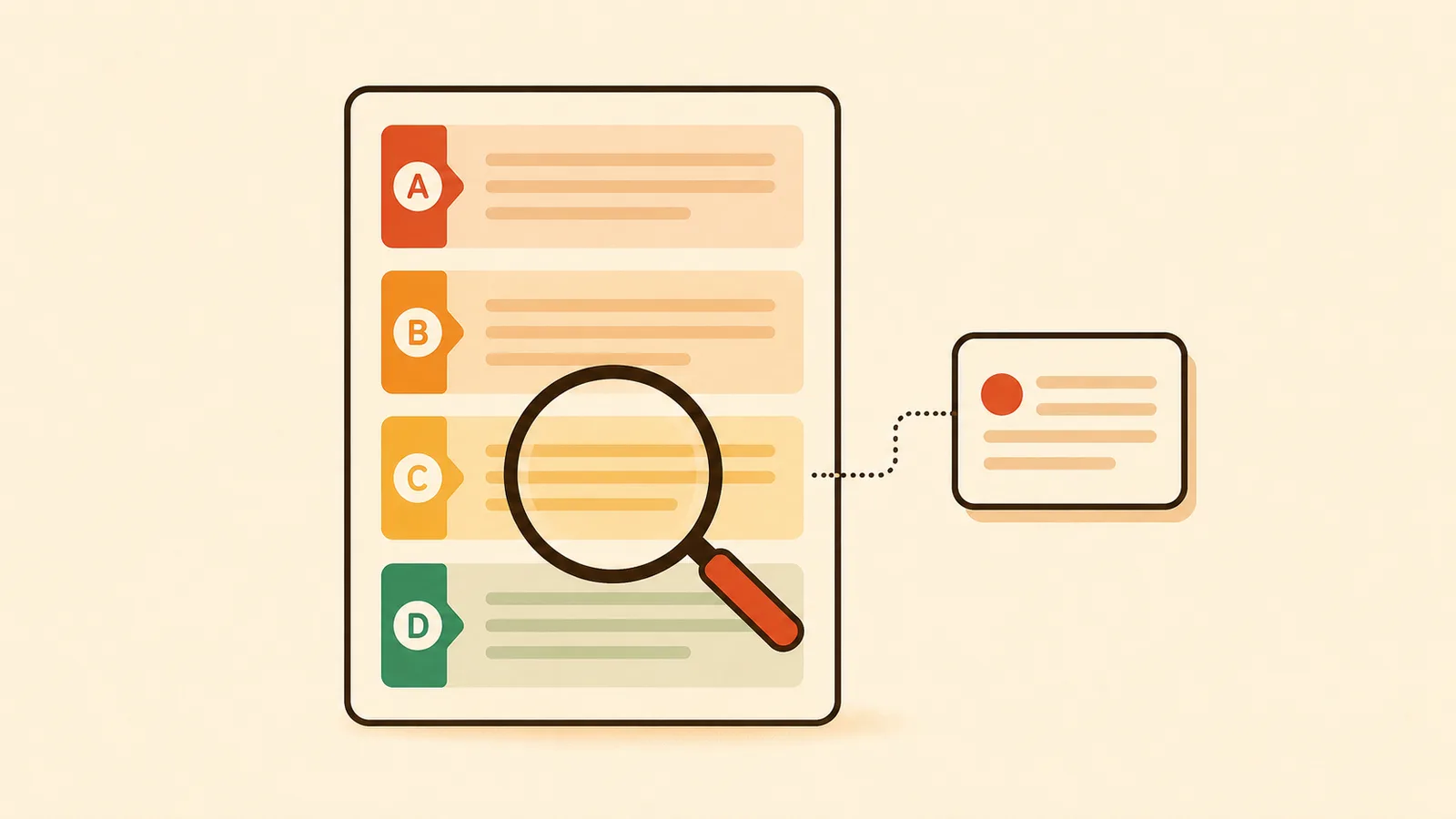
Don't read the whole diagram top to bottom — that's slow and you'll forget it anyway. Instead:
- Read the question first so you know the one detail you're hunting.
- Go to the relevant part of the diagram — the row, the box, the time slot.
- Cross-check it against the message to confirm the match.
- Answer and move — resist re-scanning the whole visual.
You're navigating to a fact and verifying it, not absorbing the diagram.
Watch the small print
Part 2 loves details that almost match — a time that's close but not exact, a name that's similar, a column you skimmed past. When two options look right, the difference is usually a single specific in the diagram. Slow down for that one detail, then speed back up.
Protect your time for Part 4
Part 2 should be quick so you keep minutes for Part 4, where following an argument genuinely takes longer. If a Part 2 question won't resolve, make your best match, flag it, and move on — more in CELPIP Reading time management. For the part right before this, see Part 1: reading correspondence.
The habit only sticks with reps in the real format — practise CELPIP Reading free, as much as you like, and watch your level move.