CELPIP Reading Part 3: reading for information
What Part 3 asks — matching statements to the paragraph that contains them — plus the label-the-paragraphs method and when to trust 'Not given'.

⚡ The short version
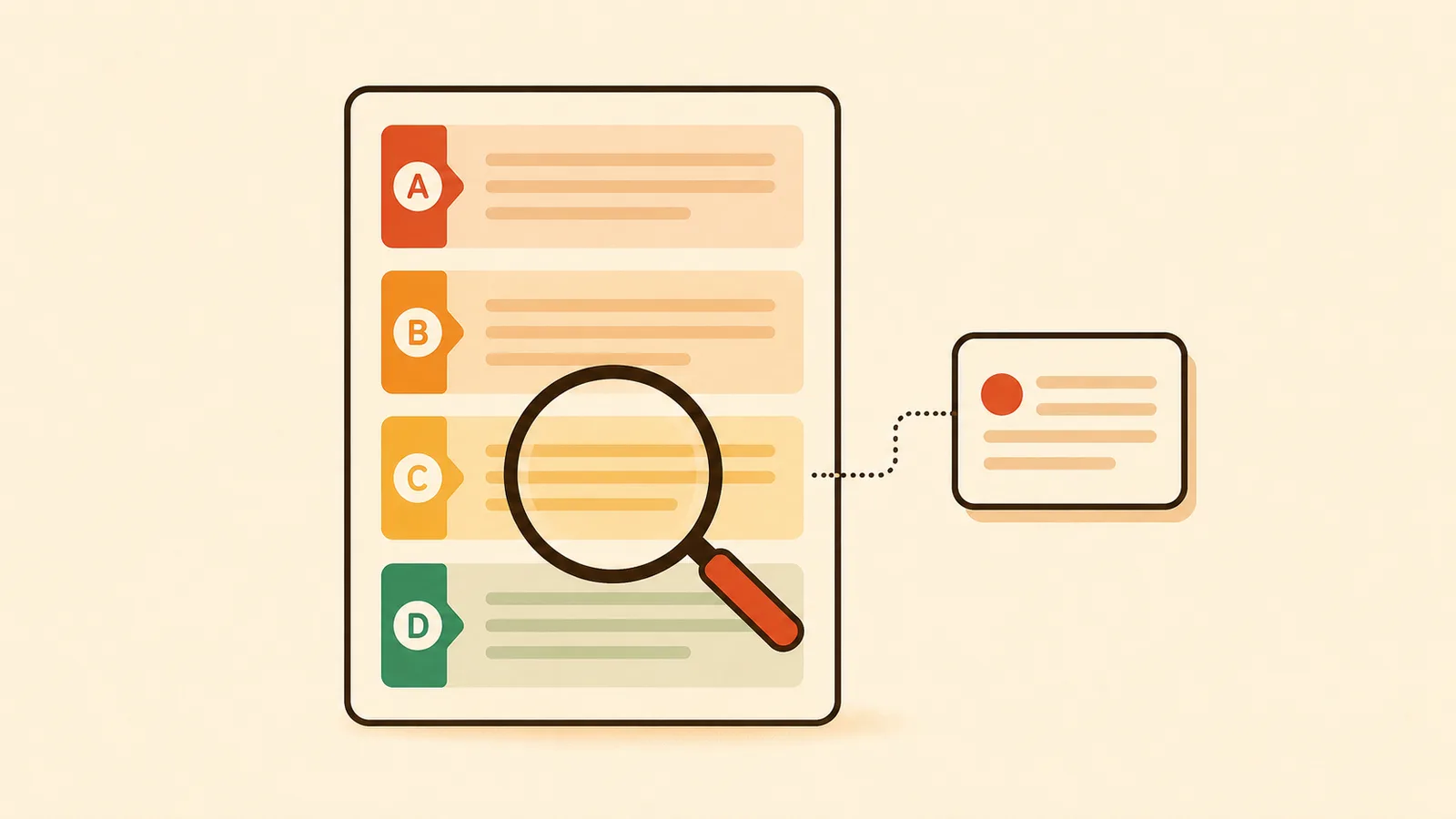
- Part 3 gives you an informational passage in four paragraphs (A–D) and statements to match to the paragraph that contains that information.
- One answer choice is 'Not given' — and expect at least one statement that really isn't in the passage. Forcing a match is the classic error.
- Label each paragraph's job in three words first; then you're matching topics, not re-reading the whole passage per statement.
Part 3 hands you a factual passage — how something works, a program, a place, a piece of history — split into four paragraphs labelled A to D. Then come the statements. For each one, your job is deceptively simple: which paragraph contains this information? A, B, C, D… or the fifth option, "Not given in any paragraph." That last choice is where this part quietly decides your score.
What Part 3 looks like
An informational passage, four paragraphs, each covering its own territory — say A introduces a community program, B explains how it started, C describes who uses it, D covers costs and plans. The statements typically paraphrase facts from the passage — don't count on them reusing its wording. You're not answering questions about the content so much as locating it. For where this sits in the section, see the CELPIP Reading section, part by part.
Label the paragraphs first
The efficient method isn't statement-by-statement re-reading — it's a 20-second indexing pass: skim each paragraph just enough to give it a three-word job title. A — what it is. B — history. C — who it helps. D — money and future. Write nothing; just hold the map.
Now each statement becomes a two-step lookup:
- Read the statement and name its topic. Money? That smells like D.
- Verify in that one paragraph. Find the sentence that says the same thing in different words. Found it → answer. Not there → check the one other plausible paragraph → still no → Not given.
You end up reading each paragraph properly only when a statement sends you there — the same question-first habit that runs the whole Reading section.
Respect the "Not given"
Expect at least one statement that genuinely appears nowhere in the passage — that's by design, not a trick gone wrong. The classic error is refusing to believe it: the statement sounds reasonable, paragraph C is about that topic, so you pick C. But "same topic" isn't "same information." The rule that settles it: if you can't point at the sentence that says it, it's not given. Reasonable-sounding isn't evidence — CELPIP writes those statements precisely to test whether you know the difference.
Match meanings, not words
The mirror-image trap: a statement shares a distinctive word with paragraph B, so B feels right — but the actual fact lives in C, phrased with synonyms. A shared keyword proves nothing by itself. When a statement and a paragraph share vocabulary, slow down for one beat and check the claim, not the keyword: who did what, when, how much.
Don't let the Not-givens eat the clock
Part 3 deserves its share of the section's time — the passage is denser than the early parts — but it rewards decisiveness. With a good paragraph map, most statements resolve quickly; the ones that drag are usually Not-givens you're over-searching. Make the call, flag it if you must, and protect the minutes Part 4's viewpoints genuinely need. And if you're coming from the earlier parts, the contrast helps: Part 2 is a lookup across two sources; Part 3 is a lookup across four paragraphs — same discipline, bigger haystack.
Like every Reading habit, this one only becomes automatic with reps in the real format — practise CELPIP Reading free, as much as you like, and watch your level move.